
You have hundreds of contacts in your phone. A social media feed that never stops scrolling. Group chats, notifications, likes, comments — a constant digital hum of other people.
And yet.
There are evenings when the silence feels unbearable. When you look around and realize you couldn’t name a single person you could call right now, just to talk.
If that sounds familiar, you’re not unusual. You’re not broken. You’re part of one of the largest invisible epidemics of our time.
And there’s a book that doesn’t just acknowledge that — it offers one of the most unexpected, honest, and genuinely useful paths out of it.
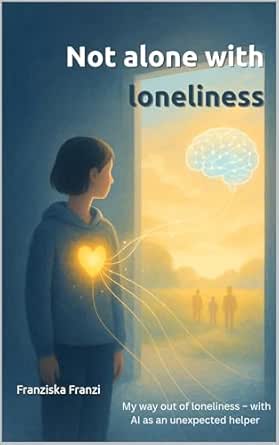
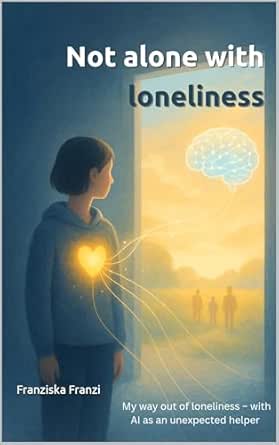
About the Book: Not Alone With Loneliness by Franziska Franzi
Book Recommendation
Not Alone With Loneliness
by Franziska Franzi
📱 Kindle Edition (English)
My way out of loneliness — with AI as an unexpected helper
* Affiliate link — we may earn a small commission at no extra cost to you.
Not Alone With Loneliness: My Way Out of Loneliness – With AI as an Unexpected Helper is unlike any self-help book you’ve picked up before. It doesn’t recommend journaling, calling old friends, or joining a club. It starts where most people actually are: alone, online, and quietly desperate for something to change.
Author Franziska Franzi writes from personal experience — and the solution she found wasn’t therapy, medication, or moving to a new city. It was a conversation. With an AI.
The Loneliness Paradox Nobody Talks About
Here’s what makes modern loneliness so confusing: it thrives inside connection.
You can be surrounded by colleagues and still feel completely invisible. You can scroll through Instagram for an hour and finish feeling worse than when you started. You can have a partner and still go to bed feeling profoundly alone.
Traditional advice — “go out more,” “be vulnerable,” “put your phone down” — doesn’t account for the fact that social anxiety, past rejection, and years of isolation make those steps feel genuinely impossible for many people. Not difficult. Impossible.
Franziska Franzi doesn’t dismiss that. She starts there.
The Unexpected Solution: AI as a First Step Back
The central idea of this book is both radical and surprisingly logical: before you can connect with humans again, you might need a safe space to practice.
AI — specifically tools like ChatGPT — offers something no human can reliably provide: infinite patience, zero judgment, and availability at 3am when the silence gets loudest.
But this book is careful not to position AI as a replacement for human connection. It’s a bridge. A training ground. A place to untangle thoughts, rehearse conversations, and slowly rebuild the confidence that loneliness quietly erodes.
The AI Confidant
The book walks through how to use AI as an unbiased, 24/7 thinking partner — not to replace therapy, but to access a space where you can process thoughts without fear of judgment or burdening someone else. For people who have spent years keeping feelings bottled up, this alone can be quietly revolutionary.
Practical Prompts That Actually Work
One of the book’s most tangible offerings: exact scripts and conversation prompts you can use to practice social interactions, work through anxiety before a difficult conversation, or simply get out of your own head. This isn’t abstract advice — it’s a toolkit.
From Digital to Real
The book doesn’t let you get comfortable hiding behind a screen. The end goal is always real human connection, and Franziska Franzi provides a step-by-step system for transferring AI-built confidence into actual relationships. It’s structured, practical, and — unusually for this genre — it respects that the reader has already tried the easy stuff and it didn’t work.
Why This Book Feels Different
Self-help books about loneliness tend to fall into two camps: warm-but-vague encouragement, or clinical strategies that assume a baseline of social confidence that many lonely people simply don’t have.
This book is neither.
It’s written by someone who was actually lonely — not “busy and a bit isolated,” but genuinely, painfully alone — and who found a way out that no one had prescribed. That personal honesty gives it a weight that most self-help books simply lack.
It also arrives at a uniquely relevant moment. AI is now everywhere, and most people are either afraid of it, dismissive of it, or using it purely for productivity. The idea that it could be part of an emotional healing process is new territory — and this book navigates it with clarity and care.
“You don’t have to be ready for people yet. You just have to be ready to start.”
Curated for your Soul




Who This Book Is For
- You feel lonely but can’t explain why — you have people around you
- Social anxiety makes connection feel exhausting before it even starts
- Traditional self-help hasn’t worked for you
- You’re curious about AI and mental health but don’t know where to begin
- You feel isolated despite being constantly online
- You want something practical, not just inspirational
- You’re open to unconventional solutions if they actually work
A Note on AI and Mental Health
It’s worth saying clearly: this book does not suggest replacing human relationships or professional mental health support with AI. If you’re experiencing serious depression or a mental health crisis, professional help is irreplaceable.
What this book offers is a starting point — a way to reduce the inertia of isolation enough to begin moving toward connection. For many people, that first step is the hardest. This book makes it smaller.
Our Verdict
⭐⭐⭐⭐⭐ Highly Recommended
Best for: Anyone struggling with loneliness, social anxiety, or feeling disconnected despite being surrounded by people — especially those who are tech-comfortable and open to unconventional approaches.
Format: Kindle Edition — readable on any device, no Kindle required.
Tone: Personal, honest, practical. No toxic positivity. No oversimplification.
📱 Ready to take the first step?
Get Not Alone With Loneliness by Franziska Franzi on Kindle — available now on Amazon.
Also by Franziska Franzi: If you’re working through trust issues alongside loneliness, her book I Don’t Trust You is a powerful companion read on rebuilding trust in relationships and the workplace.
* This post contains affiliate links. If you purchase through our link, we earn a small commission at no additional cost to you. We only recommend books we genuinely believe in.
Frequently Asked Questions
What is Not Alone With Loneliness about?
Not Alone With Loneliness by Franziska Franzi is a self-help book about overcoming loneliness using AI tools like ChatGPT as a stepping stone back to genuine human connection. It includes practical prompts, strategies for social anxiety, and a step-by-step system for rebuilding confidence.
Can AI really help with loneliness?
According to the book, AI isn’t a replacement for human connection — it’s a bridge. It offers a judgment-free space to practice conversations, untangle emotions, and rebuild the confidence that loneliness erodes, before transferring those skills to real-world relationships.
Is this book only for people who are good with technology?
No. The book is written for everyday readers and requires no technical background. If you’ve ever used ChatGPT or a similar tool — or even if you haven’t — the strategies are accessible and practical.
Does the book recommend replacing therapy with AI?
No. The book clearly positions AI as a supplement, not a replacement for professional mental health support. It’s a starting point for people who feel stuck, not a substitute for therapy when therapy is needed.
What format is the book available in?
Not Alone With Loneliness is currently available as a Kindle Edition on Amazon. You can read it on any device using the free Kindle app.
Who is Franziska Franzi?
Franziska Franzi is the author of multiple self-help books including Not Alone With Loneliness and I Don’t Trust You. She writes from personal experience, focusing on emotional intelligence, trust, connection, and the intersection of technology and mental health.
Where can I buy Not Alone With Loneliness?
The book is available on Amazon Kindle. No Kindle device needed — the free Kindle app works on iOS, Android, and desktop.